


When food manufacturers introduce new products, change packaging formats or increase production output, keeping the sterilization process in step with the rest of the production line becomes a key planning challenge.
For manufacturers of ready meals, fortified foods, functional beverages and pet food, product characteristics, packaging formats and batch sizes all affect filling, conveying, thermal processing and downstream packaging.
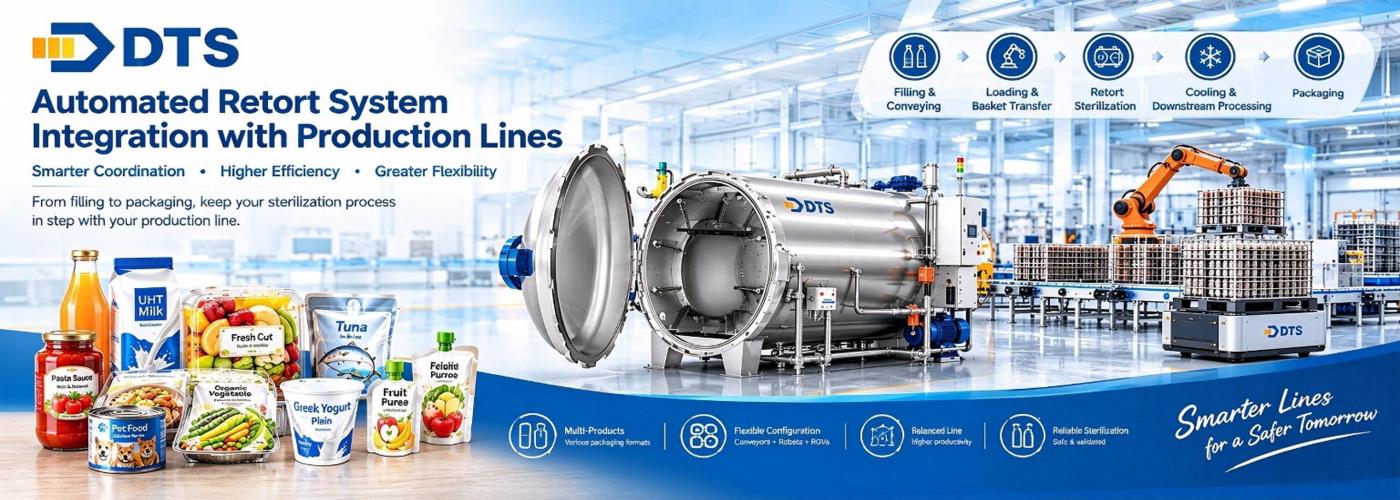
An automated retort system must therefore do more than meet sterilization requirements. It also needs to work efficiently with upstream and downstream equipment.
Increasing Production Capacity Takes More Than Adding Retorts
If filling equipment runs faster than the retort process can handle, products may accumulate before sterilization. Adding more retorts alone may not solve the problem if loading, basket transfer and unloading cannot keep pace.
When planning production capacity, manufacturers should consider filling speed, loading and unloading time, the complete retort cycle, basket availability and downstream packaging capacity. The goal is to identify the actual production bottleneck before investing in additional equipment.
Handling Different Products and Packaging Formats
Cans, glass bottles, plastic containers and flexible pouches have different requirements for loading arrangements, baskets and thermal processing.A retort automation system can coordinate product conveying, loading and basket transfer. However, each product still requires an appropriate sterilization process that has been assessed and validated for the specific product and packaging format.For plants handling multiple products, changeover time also matters. Basket configurations, loading arrangements and equipment settings may need to be adjusted when switching between packaging sizes or product types.
How Do Conveyors, Robots and RGVs Work Together?
In an automated food processing line, conveyors connect different workstations, robots handle tasks such as automatic loading and unloading, and RGVs (Rail Guided Vehicles) transfer retort baskets between buffer areas and retort units.A PLC-based control system coordinates equipment operation through status signals and interlocks. Before the next step begins, the system may need to confirm that the target station is available, the retort cycle is complete and the receiving equipment is ready.
This coordination helps reduce unnecessary waiting and keeps baskets moving through the process. The actual configuration depends on the plant layout, required production capacity, basket handling method and equipment safety requirements.
Why Downstream Handling Matters After Retort Sterilization
After retort sterilization, products may require cooling, drying, inspection, labeling, case packing or palletizing, depending on the product and packaging format.If downstream equipment cannot handle the output at the required rate, products may accumulate after sterilization. Unloading may also be delayed, leaving retorts waiting for the next batch.When planning an automated retort line, manufacturers should therefore consider downstream processing speed, buffer capacity and the return route for empty baskets, as well as the sterilization process itself.For existing plants, adding conveyors or automatic loading and unloading equipment in stages may be a practical alternative to fully automating the entire line at once.
What Should Be Evaluated Before Retort Automation?
Before installing a new automated retort system or upgrading an existing food processing line, manufacturers should assess several factors:
* Production bottlenecks: Is the main bottleneck the retort capacity or the loading, unloading and transfer operations?
* Product compatibility: Can current machines process a variety of products and the variations of the containers they come in?
* Line balance: Do the upstream filling operations match the processing speed of the downstream packaging operations?
* Plant layout: is the layout of plant space sufficient for conveyors, robots, RGVs and basket buffers?
* Costs and future plans for expansion: how to balance the cost of automation, cost of maintenance and the need for additional capacity in the future.
With these factors taken into consideration, manufacturers will have more knowledge when deciding upon which types of equipment are the best choice to begin automating in stages and if a phased approach should take place at all.
Individual Retorts and the Integrated Production Line
Automating the retorting process goes far beyond just mechanizing the product transfer processes or improving the speeds of existing machines; it includes the synchronization of product handling, thermal processing and final product packaging in a unified production sequence.
Manufacturers should create plans that incorporate the existing production needs and problems before choosing any RGV or PLC-based machinery or conveyors, so they can make informed decisions on how to best automate their production.Match sterilization needs with cycle times and production goals instead of just buying more gear.
Post time: Oct-15-2026