


-
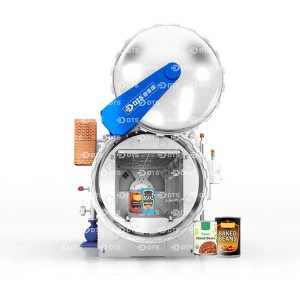
Rotary Steam Retort: Designed for Every Can of Classic Baked Beans
Baked Beans have been a classic on European and American dining tables for over a century — a spoonful on breakfast toast, a can enjoyed during camping trips, carrying simple yet rich memories of beans with a full-bodied flavor.
However, few people realize that behind this “simple and delicious” food lies one of the most challenging processes in food production: sterilization. -

Vacuum-Packed Corn and Canned Corn Sterilization Retort
Brief introduction:
By adding a fan on the basis of steam sterilization, the heating medium and the packaged food are in direct contact and forced convection, and the presence of air in the retort is allowed. The pressure can be controlled independently of the temperature. The retort can set multiple stages according to different products of different packages.
Applicable to the following fields:
Dairy products: tin cans; plastic bottles, cups; flexible packaging bags
Vegetables and fruits (mushrooms, vegetables, beans): tin cans; flexible packaging bags; Tetra Recart
Meat, poultry: tin cans; aluminum cans; flexible packaging bags
Fish and seafood: tin cans; aluminum cans; flexible packaging bags
Baby food: tin cans; flexible packaging bags
Ready-to-eat meals: pouch sauces; pouch rice; plastic trays; aluminum foil trays
Pet food: tin can; aluminum tray; plastic tray; flexible packaging bag; Tetra Recart -
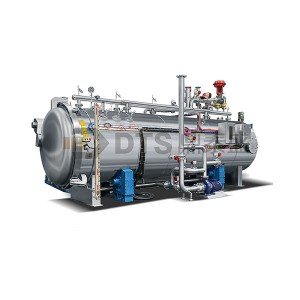
Steam And Rotary Retort
Steam and rotary retort is to use the rotation of the rotating body to make the contents flow in the package. It is inherent in the process that all air be evacuated from the retort by flooding the vessel with steam and allowing the air to escape through vent valves.There is no overpressure during the sterilization phases of this process, since air is not permitted to enter the vessel at any time during any sterilization step. However, there may be air-overpressure applied during the cooling steps to prevent container deformation.