


In food processing, bag swelling is a common issue that adversely affects product quality and brand reputation, manifesting specifically as packaging bulging or deformation, and in severe cases, leading to packaging damage or spoilage of contents. Bag swelling rarely results from a single factor; the primary causes include inadequate sterilization, sealing defects, and secondary contamination.
|
Trigger Ⅰ |
During the thermal sterilization process, inadequate control of sterilization temperature, duration, or F0 value may result in incomplete inactivation of heat-resistant microorganisms within food products. Residual microorganisms continue to proliferate and metabolize, producing gases during storage, ultimately leading to packaging bulging—a phenomenon particularly prevalent in high-nutrient food categories such as meat products and ready-to-eat foods. |
|
Trigger Ⅱ |
Even if the sterilization process meets the standards, fluctuations in heat-sealing parameters or contamination of the sealing edges with oil, impurities, or other contaminants may lead to micro-leaks in the packaging. External air and microorganisms can enter the package through these gaps, disrupting the internal sterile environment and causing product spoilage or bag swelling. |
|
Trigger Ⅲ |
Secondary contamination predominantly occurs during the cooling, handling, and transportation processes following sterilization. Factors such as contaminated cooling water, substandard production environment hygiene, or improper operational practices can lead to recontamination of sterilized aseptic products with microorganisms, subsequently causing bag swelling and product deterioration. |
In conclusion, product bag swelling is not merely a result of a single manufacturing defect but rather a comprehensive manifestation of vulnerabilities in the entire food production control system. The precision and stability of sterilization equipment are critical factors in preventing this issue.
In terms of equipment application for bag expansion prevention, the DTS high-temperature sterilization system offers significant technical advantages and effectively addresses all aforementioned causes of bag expansion.
The device employs the F₀ value for precise temperature control, enabling real-time monitoring and dynamic adjustment of sterilization intensity to ensure stable and uniform sterilization efficacy while preventing microbial gas generation-induced bag swelling. Heat is uniformly distributed throughout the product interior, with optimized thermal penetration design addressing the issue of food being “well-cooked on the outside but raw inside,” making it compatible with various product types.
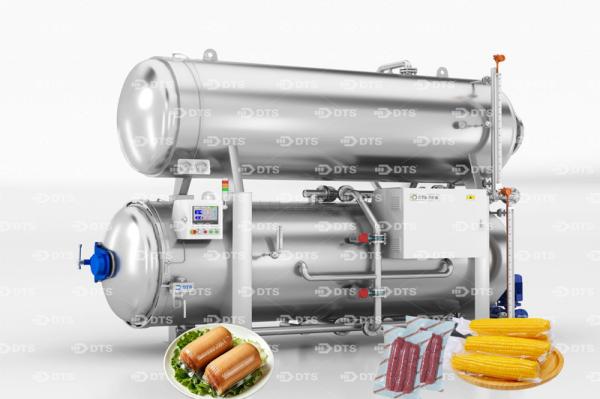
Furthermore, the DTS sterilizer demonstrates exceptional stability in pressure regulation and temperature control profiles. Equipped with a fully automated control system, it enables real-time data recording throughout the entire production process and ensures full traceability, providing precise data support for optimizing manufacturing processes and ensuring product quality. In today’s era of standardized and intelligent upgrades in the food industry, such high-precision sterilization equipment has become essential infrastructure for food enterprises to ensure food safety and maintain consistent product quality.
Post time: Jun-15-2026