


In an automated food processing line, an RGV (Rail Guided Vehicle) is mainly used to transfer product loads between the conveyor system and retorts. In production lines equipped with multiple retorts, the RGV can also move loads between different retort units, serving as part of the material handling system.
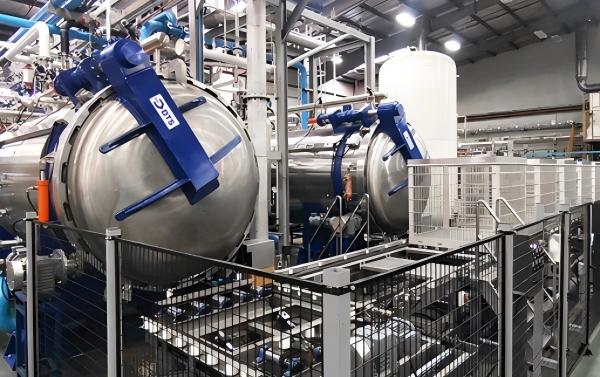
How Does an RGV Work with Retorts?
After the products are loaded onto trays or baskets, the front-end conveyor transfers them to the RGV loading position. The RGV then moves along a fixed rail to the designated retort and, through its positioning and transfer mechanism, moves the load into the retort.
After the retort process and cooling cycle are completed, the RGV returns to the retort, removes the processed load, and transfers it to the unloading area. Empty trays or baskets can then be returned to the loading area for reuse, creating a continuous material flow.
A typical process is:
Front-end conveyor → RGV loading → Retort docking → Loading into retort → Retort processing and cooling → Unloading from retort → Back-end unloading
For production lines with multiple retorts, the RGV can move between different retort units according to the production sequence. The PLC control system can coordinate the movement of the RGV with the related equipment to improve the connection between different stages of the production process.
What Does an RGV Bring to Food Production?
Compared with manual handling, an RGV can reduce manual material transfer around the retort area and move loads along a predefined route and production sequence. Its controlled positioning and transfer process can also help reduce unnecessary movement and contact during retort loading and unloading. It can be used with different packaging formats, including pouches, cans, PP cups and trays.
An RGV can also be integrated with automatic loaders, unloaders, conveyors and, where required, MES systems to connect product transfer, retort processing and downstream unloading operations.
For food production applications such as ready meals, wet pet food, meat products, seafood, rice and sauces, the RGV system can be configured according to the product packaging, loading method, production capacity and plant layout.
An RGV is more than a transport device. It serves as a material handling link between the conveyor system, retorts and downstream processes. With appropriate system design, it can help create a more coordinated material flow within an automated retort production line.
Post time: Sep-28-2026