Thermal Sterilization Solution for Braised Quail Eggs | DTS

Short Description:


Product Detail

Product Tags

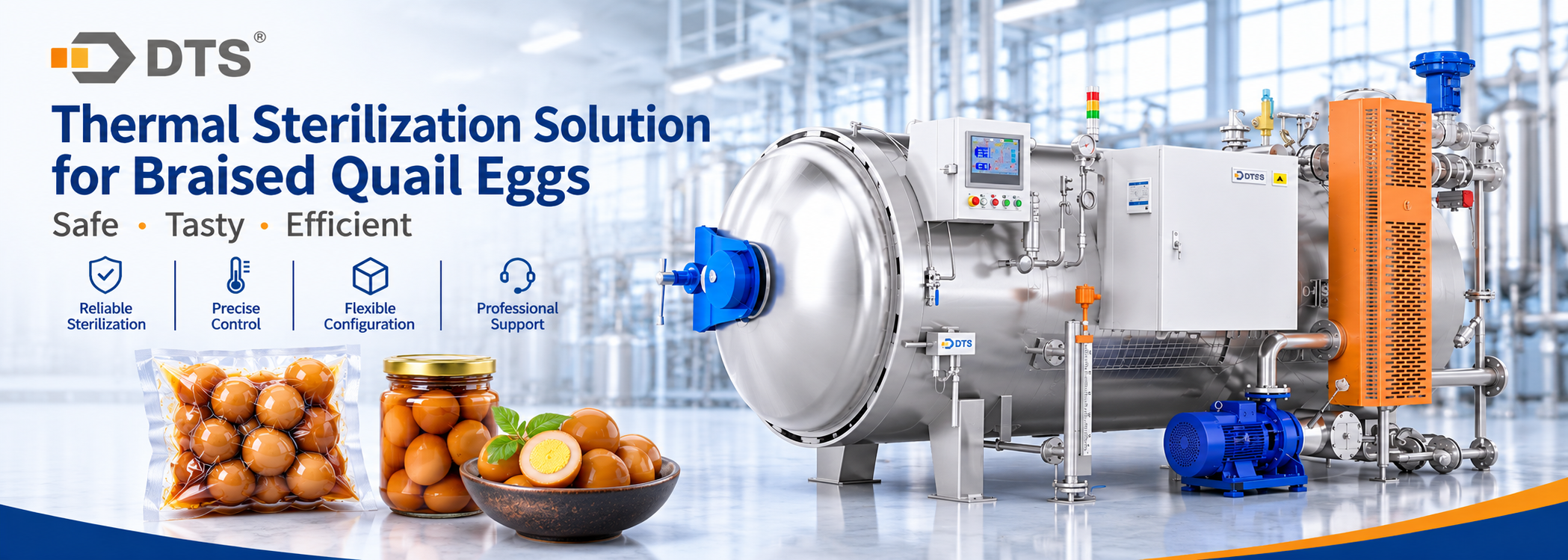
Braised quail eggs are widely found in the ready-to-eat food and snack markets. For food manufacturers, thermal sterilization involves more than microbial control. Maintaining the texture of egg whites and yolks, preventing package deformation and achieving consistent batch production are also important considerations. DTS provides retort equipment and thermal processing solutions tailored to different product formulations, packaging formats and production capacities.

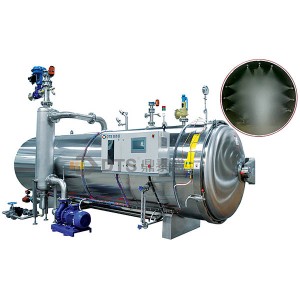
DTS water spray retort for braised quail egg sterilization

1

Controlled Heat Treatment to Maintain Product Quality

Although quail eggs are relatively small, egg whites and yolks have different structures and respond differently to heat. Excessive processing temperatures or prolonged holding times may cause the egg whites to become firm and the yolks to lose moisture, affecting the texture and eating quality of the finished product.

DTS water spray retorts use circulating hot water and a heat exchange system for heating and cooling. Combined with PLC-based control, the system manages the heating, holding and cooling stages according to the preset process schedule, helping limit unnecessary heat exposure.

For products with different formulations and loading conditions, heat penetration testing can also be conducted to identify the product cold spot and provide data for establishing an appropriate thermal process.

2

Coordinated Temperature and Pressure Control to Protect Package Integrity

Braised quail eggs are commonly packed in vacuum-sealed pouches, laminated retort pouches and aluminum foil bags. During sterilization, pressure differences between the package interior and the retort chamber may cause pouch swelling, seal damage or package leakage.

DTS water spray retorts can be equipped with an overpressure control system based on the packaging and processing requirements. Temperature and pressure are coordinated during the heating, holding and cooling stages to help reduce the risk of package deformation and damage.

For products packed in glass jars or metal cans, the temperature and pressure control settings should also be designed according to the packaging structure and pressure resistance.

3

Heat Distribution and Product Heat Penetration

For pouch-packed quail eggs, several factors can influence heat transfer, including the loading quantity, pouch arrangement, ratio of eggs to marinade and package thickness.

DTS water spray retorts use circulation pumps, heat exchangers and spray nozzles to distribute heated water throughout the retort chamber. Proper nozzle arrangement helps improve heat distribution and maintain consistent processing conditions across different loading positions.

However, the temperature displayed by the retort control system does not necessarily represent the temperature at the center of the product. Heat distribution and heat penetration tests are therefore important for identifying cold spots and establishing an appropriate sterilization process.

4

Automated Control for Consistent Batch Processing

As production volumes increase, food manufacturers need to consider not only sterilization performance but also overall batch cycle time and operating efficiency.

DTS retorts feature PLC-based control systems that allow operators to set processing temperature, pressure and time according to the established process schedule. The system then executes the corresponding sterilization cycle automatically.

Depending on production requirements, loading baskets, conveying equipment and automated loading and unloading systems can also be integrated to reduce manual handling and improve batch-to-batch process consistency.

5

From Retort Equipment Selection to Thermal Process Support

Thermal sterilization of braised quail eggs is not simply a heating operation. It requires careful consideration of product characteristics, packaging structure, heat penetration and pressure control.

DTS specializes in thermal processing equipment and automated production lines for the food and beverage industry. Based on product type, packaging format and production requirements, DTS provides retort equipment selection, temperature and pressure control solutions, as well as installation and commissioning support.

For sealed, low-acid quail egg products intended for ambient storage, a scheduled thermal process must be established and validated by a qualified thermal process authority to address the relevant microbiological risks. Properly selected equipment and a validated thermal process work together to meet the requirements of commercial production.

DTS provides thermal processing equipment for braised egg products and other ready-to-eat foods. Equipment configurations are developed around specific product and production requirements, helping manufacturers address food safety, product quality, package integrity and production efficiency.


  • Previous:
  • Next:

  • Related Products