


Retort Sterilization for Ready-to-Eat Meals

Ready-to-eat meals need more than convenient packaging. For manufacturers, the thermal processing step is an important part of product quality and production control.
Rice, curry, chicken, meat, vegetables, and sauces all have different formulations and heating characteristics. Packaging also varies from retort pouches and aluminum foil pouches to PP bowls, plastic containers, glass jars, and metal cans.
A food retort machine provides controlled heating, holding, and cooling to meet the thermal processing requirements of different ready-to-eat products.
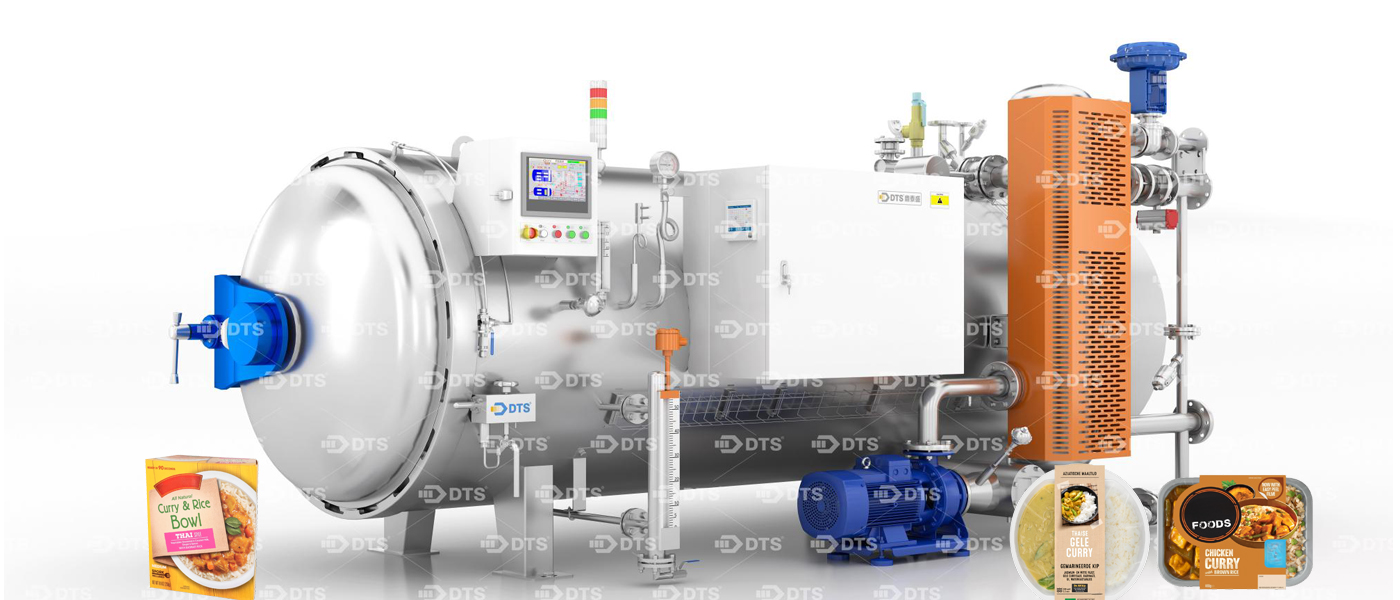
Controlled Heating for Consistent Processing
A typical retort sterilization process includes heating, holding, and cooling.
With PLC control, processing recipes can be set for different products. Temperature, pressure, and processing time can be monitored throughout the cycle.
This gives manufacturers better control over production conditions and helps maintain consistency between batches.
Designed Around the Product and Packaging
There is no single thermal process that fits every ready-to-eat meal.
A pouch, PP bowl, glass jar, and metal can respond differently to heat and pressure. Product size, filling weight, formulation, and packaging material can also affect heat transfer.
The retort system can therefore be configured according to the product and packaging requirements. Pressure control and controlled cooling are especially important for flexible and plastic packaging, helping reduce problems such as pouch swelling or container deformation.
Protecting Product Quality During Thermal Processing
For ready meal manufacturers, achieving the required thermal process is only part of the job.
The final product also needs to meet expectations for texture, appearance, and overall eating quality.
Rice can become too soft, meat can lose its desired texture, and sauces may respond differently to extended heating. A suitable thermal process should therefore be developed around the specific product rather than simply increasing temperature or processing time.
From Retort Machine to Automated Production
A retort can also be integrated into an automated ready meal production line.
A typical process may include:
Automatic Loading → Retort → Heating → Holding → Cooling → Automatic Unloading → Conveying → Packing
Automatic loading and unloading can reduce manual handling and improve production flow. For larger production facilities, multiple retorts can be combined with conveying and handling systems to match the required production capacity.
Applications for Ready-to-Eat Foods
Food retort systems can be used for a wide range of shelf-stable ready-to-eat products, including:
- · Ready-to-eat rice
- · Curry and rice meals
- · Chicken meals
- · Meat meals
- · Prepared meals
- · Sauces
- · Soups
- · Wet pet food
Each product requires a thermal process based on its formulation, packaging type, filling weight, product size, and production capacity.
For manufacturers, choosing a retort machine is therefore not simply about chamber size. The more important question is whether the retort sterilization system matches the product, packaging, process requirements, and production line.
A well-matched thermal processing system can help manufacturers build a more consistent and manageable production process for ready-to-eat meals.


