


Scaling Up pickled cucumber Production: How Cascade Retorts Improve Quality and Efficiency

Pickled cucumbers are a popular preserved food product. in European and American markets. As consumer demand continues to grow, pickle production is gradually moving from traditional processing toward standardized and large-scale manufacturing.
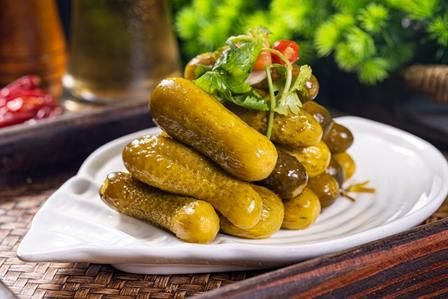
For food manufacturers, producing pickles on an industrial scale requires more than just meeting consumer expectations for taste, color, and texture. Companies must also ensure long shelf life, stable production capacity, and reliable food safety control. In this process, sterilization plays a key role in maintaining consistent product quality.
Challenges in Pickled cucumbers Sterilization
Pickles are commonly packed in glass jars, plastic containers, or flexible pouches. Different packaging materials have different heat transfer characteristics. During large-scale production, traditional sterilization methods may lead to uneven heat distribution.
Insufficient sterilization can affect product safety and shelf life, while excessive heating may cause problems such as softened texture, color changes, and loss of original flavor.
Therefore, food manufacturers need more than simply increasing sterilization temperature. They need a more precise and efficient thermal processing solution to achieve a balance between food safety and product quality.
Cascade Retorts Solves Pickle Processing Challenges
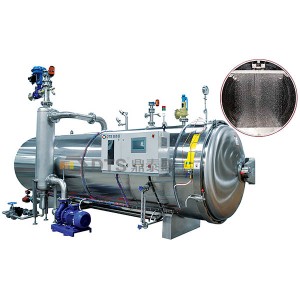
Designed for products such as Pickled cucumbers and other preserved foods, the Cascade Retorts uses an advanced water spraying system to provide uniform heat transfer. By continuously circulating hot water, the system helps maintain stable temperature distribution throughout the retort.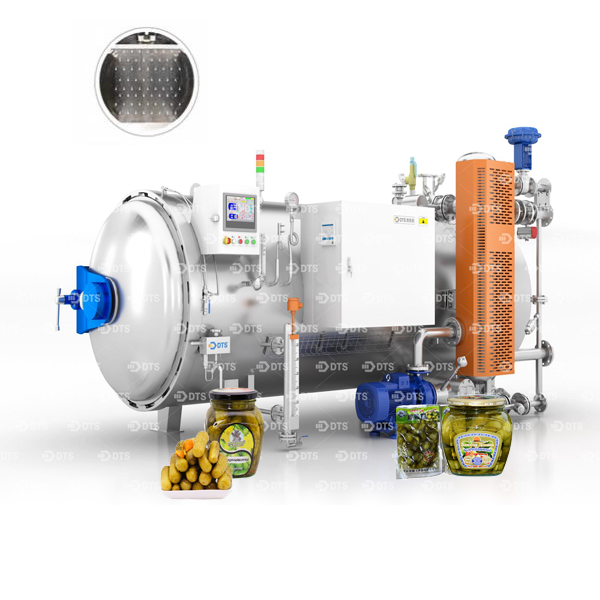
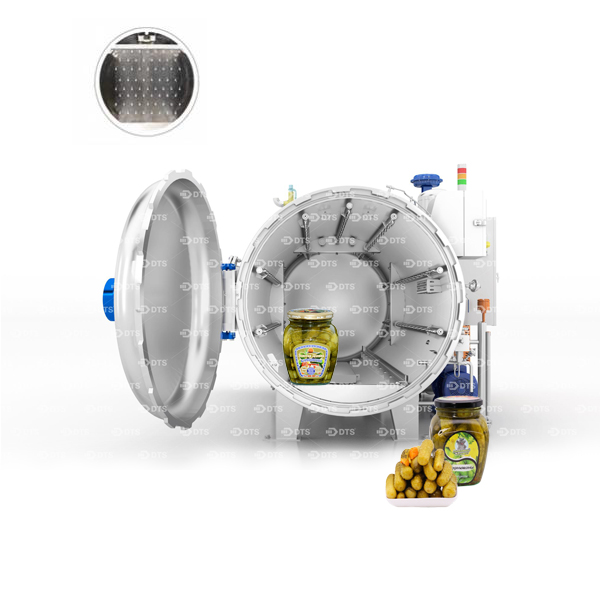
During sterilization, hot water is evenly sprayed from the top of the chamber, allowing heat to transfer efficiently into the product packaging. This helps reduce temperature differences and improves sterilization consistency compared with traditional methods.
With accurate control of heating, holding, and cooling stages, the Cascade Retort helps manufacturers achieve:
- · Stable sterilization performance
- · Consistent product quality
- · More efficient production processes
Flexible Packaging Compatibility for Different Production Needs
As the Pickled cucumbers market continues to expand, packaging formats are becoming increasingly diverse.
Cascade Retort can be applied to various products, including:
- · Pickled cucumbers in glass jars
- · Pickled foods in plastic containers
- · Flexible pouch products
- · Other seasoned vegetable products
The flexible process adjustment capability allows manufacturers to optimize sterilization parameters according to different product characteristics, improving production flexibility and efficiency.
From Stable Sterilization to Smart Manufacturing
Modern food manufacturers are not only focused on food safety but also on production efficiency, energy consumption, and automation.
Equipped with an intelligent control system, the Cascade Retort enables precise management of the sterilization process, reduces manual operation, and improves overall production stability.
For pickle producers, advanced sterilization equipment is not only a tool for ensuring food safety but also an important foundation for improving product competitiveness and meeting growing market demand.
Conclusion
With the continuous development of the preserved food industry, food manufacturers are placing higher demands on sterilization technology.
From pickles to a wide range of seasoned food products, stable, efficient, and intelligent thermal processing solutions are becoming an important trend in food manufacturing upgrades.
With advantages such as uniform heat distribution, precise process control, and compatibility with multiple packaging formats, Cascade Retort provide reliable industrial sterilization solutions for Pickled cucumbers production, helping companies improve quality, efficiency, and production capacity.


- English
- French
- German
- Portuguese
- Spanish
- Russian
- Japanese
- Korean
- Arabic
- Irish
- Greek
- Turkish
- Italian
- Danish
- Romanian
- Indonesian
- Czech
- Afrikaans
- Swedish
- Polish
- Basque
- Catalan
- Esperanto
- Hindi
- Lao
- Albanian
- Amharic
- Armenian
- Azerbaijani
- Belarusian
- Bengali
- Bosnian
- Bulgarian
- Cebuano
- Chichewa
- Corsican
- Croatian
- Dutch
- Estonian
- Filipino
- Finnish
- Frisian
- Galician
- Georgian
- Gujarati
- Haitian
- Hausa
- Hawaiian
- Hebrew
- Hmong
- Hungarian
- Icelandic
- Igbo
- Javanese
- Kannada
- Kazakh
- Khmer
- Kurdish
- Kyrgyz
- Latin
- Latvian
- Lithuanian
- Luxembou..
- Macedonian
- Malagasy
- Malay
- Malayalam
- Maltese
- Maori
- Marathi
- Mongolian
- Burmese
- Nepali
- Norwegian
- Pashto
- Persian
- Punjabi
- Serbian
- Sesotho
- Sinhala
- Slovak
- Slovenian
- Somali
- Samoan
- Scots Gaelic
- Shona
- Sindhi
- Sundanese
- Swahili
- Tajik
- Tamil
- Telugu
- Thai
- Ukrainian
- Urdu
- Uzbek
- Vietnamese
- Welsh
- Xhosa
- Yiddish
- Yoruba
- Zulu
- Kinyarwanda
- Tatar
- Oriya
- Turkmen
- Uyghur