


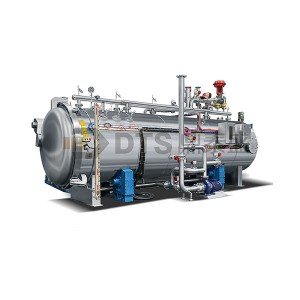
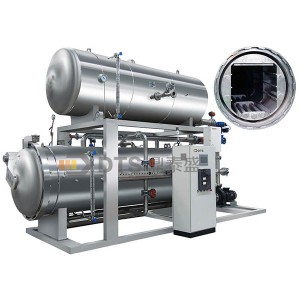
Ready-to-Eat Rice in Retort Pouches | Water spray rotary retort


Why More Consumers Are Choosing Ready-to-Eat Rice
Rice is a staple food in many parts of the world, but the way people prepare it is changing. Busy work schedules, smaller households, travel, camping and convenience-focused meal choices have created more demand for foods that require little preparation.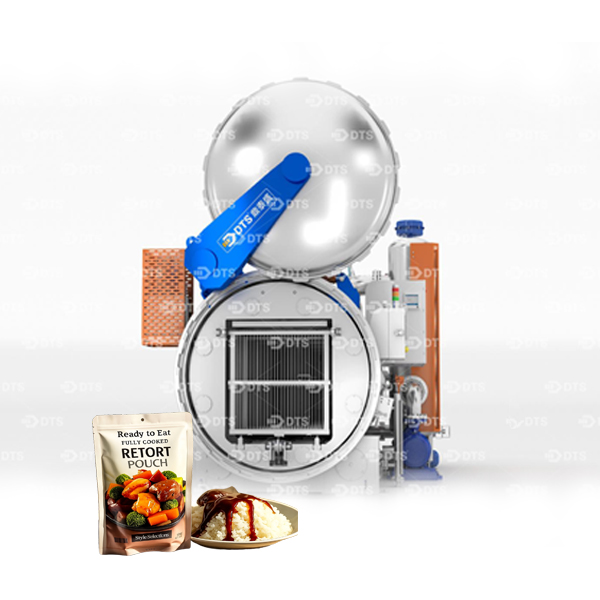
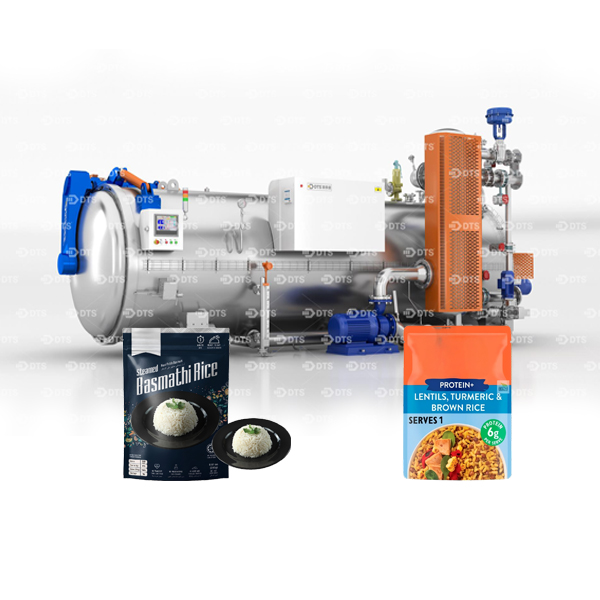
Ready-to-eat rice fits naturally into these situations. The rice is cooked before packaging, so consumers do not need to start with raw rice or spend time preparing a full meal. Depending on the product, it can simply be heated before eating.
The pouch format adds another practical benefit. Retort pouches are lightweight and take up relatively little space during transportation and storage. This makes them suitable for products designed for home use as well as offices, travel and outdoor activities.
The choices available on the market are also changing. Alongside plain white rice, products may include Basmati Rice, Jasmine Rice, Brown Rice, Wild Rice, Quinoa & Rice and other grain combinations. More complete meal concepts combine rice with chicken, beef, vegetables, beans, curry or sauces.
For consumers, the attraction is fairly straightforward: less preparation, easy handling and a meal that can be kept available when it is needed.
Why Food Safety Becomes a Key Consideration
The convenience of ready-to-eat rice starts with what happens inside the processing plant.
Cooked rice contains moisture and nutrients that can support microbial growth if the product is not properly controlled. This becomes particularly relevant when a product is designed for ambient storage, where refrigeration is not part of the normal distribution or storage chain.For these products, thermal processing is one of the controls manufacturers may use to achieve the required level of food safety.After the rice is filled and the pouch is sealed, the packaged product can be processed in a retort. During retort sterilization, temperature, pressure and processing time are controlled according to the requirements established for the particular product.
The purpose is not simply to heat the rice. The process needs to deliver the required thermal treatment throughout the product while maintaining the integrity of the package.
Rice Is Not Always Easy to Process Consistently
One of the challenges with ready-to-eat rice is that different products behave differently during thermal processing.
The moisture content of the rice, grain structure, fill weight, pouch thickness and product density all affect heat transfer. A plain white rice product may respond differently from a brown rice and quinoa blend.
The situation becomes more complicated when rice is combined with other ingredients. Chicken, beef, vegetables, beans, curry and sauces can change the way heat moves through the pouch.
This is why processing conditions cannot always be copied from one product to another.
Manufacturers may use heat penetration testing to understand how the product heats inside the package. The information can then be used to establish processing conditions appropriate for the specific formulation, package size and filling configuration.
Higher Heat Does Not Automatically Mean Better Processing
There is also a practical reason to pay attention to the intensity of thermal processing.
Ready-to-eat rice needs to meet its food safety requirements, but the product still has to be enjoyable to eat. Excessive heat treatment may affect the texture of rice, moisture distribution and the characteristics of ingredients such as vegetables, meat or sauces.
For this reason, the objective is not simply to use the highest possible temperature or the longest possible processing time. The process needs to be designed around the actual product.
A suitable retort process takes into account the target food safety requirements while also considering heat penetration, product quality and package performance.
The Retort Pouch Is Part of the Process
Packaging is another factor that should not be overlooked.
Retort pouches are designed to withstand the conditions required for high-temperature processing. Compared with many rigid containers, they can offer advantages in weight and transportation efficiency.
At the same time, flexible packaging has its own requirements.
Pouch dimensions, sealing quality, fill weight and internal pressure can affect how the package behaves during retort processing. The arrangement of pouches inside retort baskets also needs to be considered because it can influence water or steam circulation and heat transfer.
For a food manufacturer, choosing a retort pouch and choosing a sterilization process are therefore closely connected decisions.
Production Efficiency Matters as Much as Product Quality
Once a ready-to-eat rice product moves from development to commercial production, another set of questions appears.
How many pouches need to be processed in each batch? How should the pouches be loaded? How does retort processing fit with filling and sealing? How much manual handling is required? What happens during cooling?
These questions become increasingly important as production volumes increase.
A retort system therefore needs to fit into the wider production process rather than operate as an isolated piece of equipment. Loading, thermal processing and cooling all have an effect on production flow.
Energy use is another consideration. Depending on the equipment design, product format and process conditions, manufacturers may look at ways to use water, steam and cooling resources more efficiently without compromising the required processing conditions.
What Does This Mean for the Consumer?
Most consumers will never see the retort used to process their rice. They simply open the pouch, heat the product and eat it.
But the experience at the table is connected to decisions made much earlier in the production process.
A suitable formulation, reliable pouch, controlled thermal process and appropriate cooling procedure all contribute to the finished product. When these elements are properly considered together, manufacturers can work toward consistent food safety and product quality from batch to batch.
This is particularly relevant as ready-to-eat rice continues to expand beyond plain rice. Curry rice, chicken rice, beef rice, rice and beans, grain blends and other complete meal products all bring different processing considerations.
A Broader View of Ready-to-Eat Rice Production
For food companies developing ready-to-eat rice in retort pouches, the retort itself is only one part of the equation.
The starting point is the product: the type of rice, recipe, ingredients, fill weight and desired eating characteristics. From there, packaging, heat penetration, sterilization parameters and cooling conditions can be evaluated together.
This approach gives manufacturers more information when developing a new product or improving an existing production process. It can also help identify where unnecessary processing, packaging problems or production bottlenecks may occur.
Ultimately, the appeal of ready-to-eat rice is simple. Consumers want a convenient meal that is easy to store, easy to prepare and suitable for different parts of everyday life.
For food manufacturers, delivering that convenience requires more than cooking rice and putting it into a pouch. Food safety, retort sterilization, packaging performance, thermal processing and production efficiency all play a role in turning cooked rice into a reliable ready-to-eat product.
That is where thoughtful process design becomes valuable—not by making the process more complicated, but by making each stage work together around the product and the needs of the people who will eventually eat it.




- English
- French
- German
- Portuguese
- Spanish
- Russian
- Japanese
- Korean
- Arabic
- Irish
- Greek
- Turkish
- Italian
- Danish
- Romanian
- Indonesian
- Czech
- Afrikaans
- Swedish
- Polish
- Basque
- Catalan
- Esperanto
- Hindi
- Lao
- Albanian
- Amharic
- Armenian
- Azerbaijani
- Belarusian
- Bengali
- Bosnian
- Bulgarian
- Cebuano
- Chichewa
- Corsican
- Croatian
- Dutch
- Estonian
- Filipino
- Finnish
- Frisian
- Galician
- Georgian
- Gujarati
- Haitian
- Hausa
- Hawaiian
- Hebrew
- Hmong
- Hungarian
- Icelandic
- Igbo
- Javanese
- Kannada
- Kazakh
- Khmer
- Kurdish
- Kyrgyz
- Latin
- Latvian
- Lithuanian
- Luxembou..
- Macedonian
- Malagasy
- Malay
- Malayalam
- Maltese
- Maori
- Marathi
- Mongolian
- Burmese
- Nepali
- Norwegian
- Pashto
- Persian
- Punjabi
- Serbian
- Sesotho
- Sinhala
- Slovak
- Slovenian
- Somali
- Samoan
- Scots Gaelic
- Shona
- Sindhi
- Sundanese
- Swahili
- Tajik
- Tamil
- Telugu
- Thai
- Ukrainian
- Urdu
- Uzbek
- Vietnamese
- Welsh
- Xhosa
- Yiddish
- Yoruba
- Zulu
- Kinyarwanda
- Tatar
- Oriya
- Turkmen
- Uyghur